Friday, April 12, 2013

Happiness = coconut and curry

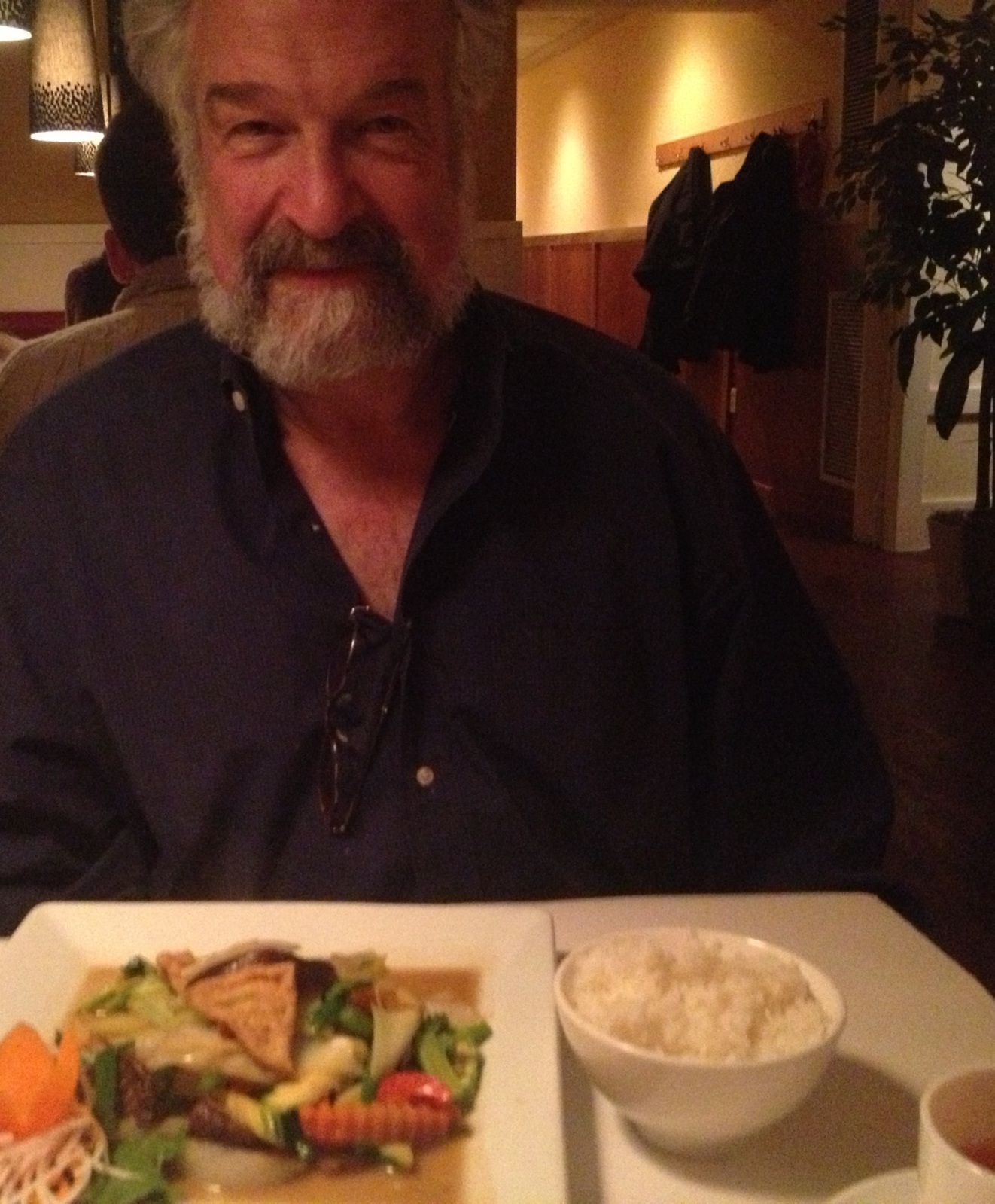
For quite some time, I had been avoiding checking out the relatively recently opened Sweet Chili 312 Thai Restaurant. It was a bias that I had carried with me from the previous tenant of the restaurant, a Siamese place that I had found in earlier years to be somewhat of a disappointment. However, I am happy to report, that the new occupants of the space have done exceptionally well at creating a serene dining atmosphere and some wonderful new takes on classic thai flavors and dishes. My dish in the above picture was a delightful combination of spicy yellow curry sauce balanced with coconut milk. It was tossed with onions, pineapple, tofu and tomatoes. 
One of my dining companions for the evening tried the grilled jumbo shrimp which were served on skewers, accompanied by a chili lime sauce, and was quite pleased with the portion, preparation and flavor of the meal. The other sampled a vegetarian dish of sauteed vegetables with tofu called Pad Pik Pow, in which they were tossed in a traditional Thai roasted chili sauce.


 I have visited a few times before deciding to take the photos and write the post, and I happy to say that I think Sweet Chili will be around for a long while. Service is excellent, the food quality is consistent, atmosphere is lovely. And, most importantly to me, there are many tasty vegetarian options! While I usually recommend that diners in search of good Thai food stay in Parkville, this is one that is worth crossing from Park St over to Park Rd to enjoy. 

Website: http://www.sweetchilli312.com

Thursday, April 11, 2013

Update and Action Request: GE Salmon Approval

Aqua Bounty vs. Native Salmon
One of the first posts that I wrote when I started this blog was about the company called Aqua Bounty Farms and my concerns about the genetically engineered fish, especially Salmon that they have been working on growing and getting FDA approval to sell to US consumers. Just to update any new readers, Wikipedia defines it as such: "the AquAdvantage salmon has been modified by the addition of a growth hormone regulating gene from a Pacific Chinook salmon and apromoter from an ocean pout to the Atlantic's 40,000 genes. These genes enable it to grow year-round instead of only during spring and summer." Now this issue has reached a head, and we have until April 26 to say no to GE Salmon being approved. From all reports, including research from the Perdue University and the National Academy of Science, there are sizable risks if these transgenic fish pose to nearby populations of native fish if escape into our waterways, which there seems little doubt that they will.  Chefs/ restaurants, grocers, and seafood distributors have been signing pledges not to sell GE Salmon based on the feedback of their customers. PLEASE  join them and find the time to go to regulations.gov, search for GE SALMON and comment and send your thoughts. The only way we have a chance to stop this from happening is to take a moment to speak up. 

LINK to Comment: http://www.regulations.gov

I also encourage you to take a few minutes and do some further reading on the subject. Good place to start is at:  Salmon Nation

Tuesday, April 9, 2013

GMO OMG & the 2013 Environmental Film Festival


GMO OMG / U.S. Premiere


Tuesday, April 9th, 7:00pm / Burke Auditorium, Kroon Hall, 195 Prospect Street

Today in the United States, by the simple acts of feeding ourselves, we are unwittingly participating in the largest experiment ever conducted on human beings. Each of us unknowingly consumes genetically engineered food on a daily basis. The risks and effects to our health and the environment are largely unknown. Yet more and more studies are being conducted around the world, which only provide even more reason for concern. We are the oblivious guinea pigs for wide-scale experimentation of modern biotechnology. GMO OMG tells the story of a fathers discovery of GMOs in relationship to his 3 young children and the world around him. We still have time to heal the planet, feed the world, and live sustainably. But we have to start now!

Followed by a panel discussion with filmmaker Jeremy Seifert, Justin Freiberg, and Tara Cook-Littman.

About the Filmmaker
In 2010, Jeremy completed his debut film, DIVE!, Living Off America’s Waste. Initially made with a $200 budget, a borrowed camera, and a lot of heart, DIVE! went on to win 22 film festivals worldwide - including screening at EFFY 2010. With the release of DIVE!, Jeremy began the production company, Compeller Pictures. He is now a filmmaker and activist, traveling the country and speaking on humanitarian and environmental issues. Jeremy’s second film, GMO OMG, tells the hidden story of the take over of our food supply by giant chemical companies, an agricultural crisis that has grown into a cultural crisis. He has once again found the heart of the project in his own journey and awakening. Jeremy and his wife, Jen, live in North Carolina with their three children, Finn (7), Scout (4), and Pearl (2).

Preceded By: Mushroom Man
3 min. Dir. Leslie Iwerks. This is the story of how mushrooms can save the world! Renowned mycologist and mushroom pioneer Paul Stamets harnesses the power of infamous fungi to fight the planet’s leading problems, from developing cures for cancer to destroying toxic radioactive waste.


Check out the entire free and relevant line up of events at the 2013 Environmental Film Festival at Yale here: http://environment.yale.edu/film/2013/gmo-omg/

Tuesday, February 19, 2013

How To Save A Public Library: Make It A Seed Bank

Despite the cold and snow, some signs of spring are starting to break through in Colorado. The public library in the small town of Basalt is trying an experiment: In addition to borrowing books, residents can now check out seeds. In a corner of the library, Stephanie Syson and her 4-year-old daughter, Gray, are just finishing a book with a white rabbit on the cover. When Gray approaches the knee-high shelves filled with seed packets, she zeroes in on a pack labeled "rainbow carrots." "We just read two books with bunnies in them, so we've got bunnies on the brain," Syson says. Syson flips through a wicker bin labeled "carrots" and offers other varieties to Gray, like "atomic red" and "cosmic purple." Here's how it works: A library card gets you a packet of seeds. You then grow the fruits and vegetables, harvest the new seeds from the biggest and best, and return those seeds so the library can lend them out to others. Syson says tending a garden in Western Colorado can be frustrating. The dry climate, alkaline soils and short growing season keep many novices from starting. She'll take seeds from the plants that withstand pests and persevere through drought.

"If you save seed from those plants, already, in one generation, you will now be able to grow a plant that has those traits," Syson says. The seed packets are a novelty within the library's more mainstream collection of books, CDs and DVDs. The library's director, Barbara Milnor, says in the age of digital, downloadable books and magazines, the tangible seed packets are another way to draw people in. "You have to be fleet of foot if you're going to stay relevant, and that's what the big problem is with a lot of libraries, is relevancy," she says. Milnor says that while a library may seem like an odd location for a project like this, seeds and plants should be open to everyone. That makes a public library the perfect home for a seed collection. The American Library Association says there are at least a dozen similar programs throughout the country.

Back at the front desk, Syson and Gray place the rainbow carrot seed packets on the counter. Syson says the library has always been a place for her daughter to learn. The seeds just add another lesson. "For her to see a little pot of dirt and to plant a seed into it, and then 30 days later being able to eat something from it is really exciting for her," she says. "She really enjoys seeing that whole process." A process that now includes a trip to the local library.

Listen to the story on NPR here: http://www.npr.org/blogs/thesalt/2013/02/02/170846948/how-to-save-a-public-library-make-it-a-seed-bank

Tuesday, December 18, 2012

The evolution of Christmas traditions in Connecticut

My mother recently became a member of the Colonial Dames Society, and as such she invited me to be her guest at the Webb-Deane-Stevens Holiday Preview Party, a series of historic homes which have been run by the society since the 1950's. Each home featured live music, appetizers and wine. We began by touring the Silas Deane House. The home was built circa 1770, and due to the lingering Puritanial customs in New England they did not celebrate Christmas, but rather prepared for New Years's Day Calling. This tradition was when promiment gentlemen of the community would call on the lady of the household and was additionally a time for outstanding debts to be paid to families. Individuals were invited over and would meet privately with the head of the house to settle accounts, or make a resolution to do so in the New Year.   
Mrs. Deane welcoming guests to her home.
We also took time to tour the kitchen, upper bedrooms (those beds were certainly small and uncomfortable looking!) and to enjoy a glass of wine while we strolled through.
Next we traipsed back out into the cold winter night to the Isaac Stevens House. This museum was decorated to show the holiday celebrations of the middle-class from the early to mid-1800s, recognizable as many of the Christmas traditions known today in New England. My favorite was what awaited us in the best parlor. The room was laden down with historically accurate treats and fancy. I admit, it did make me yearn to have been able to attend a Christmas party in the 1860's.
I would have wanted to be a guest, certainly. Working in a kitchen from that time to prepare of that food is another story entirely.
The last house that we visited was the Joseph Webb House, typical of the early 20th century and prepared for a Christmas open house that was typical of the times. Apparently, "the culmination of several weeks’ work, the lavishness of the dessert and decorations could make or break the hostess’ reputation."

 If you are looking for an entertaining activity this month, I would suggest checking this museum out. While my photographs and experience was centered on the food and it's preparation, there are many other parts of the homes to discover.

TOURS AND OTHER INFO:
"From December 15 through January 6, 2013, public holiday tours at WDS demonstrate with fascinating detail how the American holiday season has evolved over the past three centuries. Designed to delight the senses and captivate the imagination, the 60-minute guided tours unfold throughout the museum’s three meticulously restored historic houses."

About the Webb-Deane-Stevens Museum

"Located in the heart of Connecticut’s largest historic district, the Museum consists of three authentically restored 18th-century homes that bring Wethersfield’s rich history to life, from the American Revolution to the early 20th century. The museum includes the 1752 Joseph Webb House, which served as George Washington’s Revolutionary War headquarters in May 1781, when he met with French General le comte de Rochambeau; the 1770 Silas Deane House, built for a delegate to the Continental Congress and America’s first diplomat to France; and the 1788 Isaac Stevens House, which depicts life in the 18th and 19th centuries through original family objects and includes a new children’s museum."

Three-house Tour (1 hour): $10 per adult; $9 per senior over 60, AAA member and active military; $5 per student and children (5-18), $25 per family (2 adults + children). Group rates are available.

Hours
December - Open for tours daily 10 a.m.-4 p.m. with the exception of Tuesday; Sunday, 1-4 p.m. Note - The museum closes at 2 p.m. on New Year’s Eve.

Friday, December 7, 2012

Event: Calling all gin aficionados!!!

I don't know what reception I'm at, but for God's sake give me a gin and tonic.
-Denis Thatcher


An exciting event taking place this Saturday at 116 Crown in New Haven. One of the co-owners of the brand, Martin Dawson will be visiting from 5-8pm and treating all attendees to a cocktail made with their Broker's Gin!


A bit of background about their gin that I found on their website: "Creators Martin and Andy Dawson chose the image of a bowler-hatted gentlemen - an archetypal stockbroker - to reflect the fact that historically England is the home of gin. Broker’s is a seriously good gin with a quirky marketing approach. Broker’s Gin is made in a 200-year-old distillery in the heart of England using a traditional copper pot-still. The recipe is as old as the distillery. A quadruple-distilled pure grain spirit made from English wheat is redistilled with ten traditional botanicals, creating a gin of outstanding flavour and smoothness. Broker’s Gin does not follow the modern trend of using weird and wonderful spirits and botanicals. There are no oddball ingredients in Broker’s Gin. We believe our forefathers did an unbeatable job perfecting gin recipes over many hundreds of years. Broker’s Gin has won more top awards in international competitions over the last ten years than any other gin."


Thursday, November 29, 2012

It's that time again: gift ideas for the foodies in your life

EAU GOOD WATER BOTTLE WITH CHARCOAL FILTER $4.00 - $20.00
You may be surprised to know that most people in the industrialized world don't have access to high-quality drinking water. For those affected, the simple solution is to buy plastic bottles of fresh, filtered water, but unfortunately these innocuous bottles come with a price you won't pay at the checkout. Every year, over 22 billion single-use water bottles end up in a landfill. This is a global environmental problem, and fortunately, designers Black + Blum have come up with a stylish and simple solution. With a squeeze and a snap, 6 months of great tasting tap water is available at your fingertips. By providing a locking compartment for a tube of binchotan active charcoal in their cork-topped BPA-free bottle, designers Dan Black and Martin Blum have modernized this natural filter used by the Japanese since the 17th century. Binchotan reduces chlorine, mineralizes water, and balances the pH so no additional filtration is necessary for pure, refreshing tap water. Maintaining the charcoal is easy, just remove it from the bottle after three months and boil it for ten minutes. Once you've recharged it, your tube is ready to transform your tap water for another three months. (found at uncommongoods.com)   TREE STUMP CUTTING BOARD $75.00
The graphic marbling of spalted maple adds special charm to this durable cutting board. Made from fallen trees uncovered by artisan Spencer Peterman, the unique appearance of the wood is the result of the tree's natural process of deterioration. The gorgeous cutting board is coaxed from an old tree stump - leaving a natural edge - kiln-dried and given a food safe finish. The unexpected beauty of the wood makes the cutting board a special gift for amateur chefs - as well as a delightful addition to your own kitchen. Handmade in Massachusetts. (found at uncommongoods.com)


TEASTICK $22.00

 A functional everyday item made even more beautiful by simple and smart design, this teastick is made of stainless steel and plastic and features a spring mechanism that reveals a drawer for tea leaves. Place the tea stick in a cup of hot water and let the tea steep through the tiny holes at the bottom. (found at uncommongoods.com)

KITCHEN COMPOSTER $12-48.00
Recycle waste into something wonderful! This unique, odorless indoor composting system ferments and pickles food waste in less than half the time of conventional composting methods using the Japanese method of Bokashi. And don't forget the beginner's guide to composting, which will tell you everything you ever wanted to know about the wonderful world of fermentation. Convenient - Stores neatly under kitchen sink for easy access, every few weeks contents can then be buried in your garden. Large Capacity - Holds approximately 5 gallons of food waste. Air-Tight Lid - Ensures an ideal environment for anaerobic fermentation to take place, while controlling odors and deterring flies. Plastic Strainer & Spigot - Placing the plastic grate inside the bucket and then piling food waste on top of it separates the food waste from the liquid that accumulates at the bottom of the bucket. This liquid can be easily drained through the spigot and used as a nutrient-rich fertilizer for houseplants and garden. Bokashi - An all-natural compost starter containing beneficial micro-organisms that aids in fermentation. Once the bucket is full, it will take only 10 days to produce a pre-compost product ready to bury in the garden. After planting, the compost will be converted to rich topsoil in about one month. Compost inoculates the soils with beneficial and effective microorganisms which detoxify chemically treated soil, feeds the natural soil ecology, and attracts beneficial insects and nematodes. It also enhances soil fertility and increases plant yield and produce quality. (found at uncommongoods.com)

MOLECULAR GASTRONOMY KIT $60.00
What do you get when you combine food, chemistry and art? You get to deconstruct any dish, to change the look and feel of any ingredient, to impress dinner guests, and to take your tastebuds on an adventure--also known as molecular gastronomy! Turn your kitchen into a food laboratory with this how-to kit that teaches you how to transform liquids, like honey, into jelly-like cubes, spherify chopped produce into flavor-packed beads, or even morph melted chocolate into a delicate powder or spaghetti-like strands. You're only limited by your imagination! So go ahead, play with your food! (found at uncommongoods.com)

CHEESETASTING NOTEBOOK & PEN SET $45.00
Don't put up a stink when you can't recall that bit brie, bleu, chevre, or Swiss at the market! Pair this petite and practical cheese diary and pen with any piece, slice, wedge, or crumble to savor every last detail long after you've finished the final morsel. Designed to be stowed in your bag, purse, or pocket, this streamlined pen and notebook set packs a high-design punch and possess an extra special edge: dried cheddar or a few drops of cow's milk impart the notebook's ink and the pen's resin with its characteristic creamy hue. Fill in the essentials as you delight in every delectable bite, as well as a rating out of five stars, and the texture, from velvety ricotta to grated parmesan. A flavor wheel helps you identify tang, earth, brininess, robust and subtle flavor notes, and more. Once filled, this compact journal holds every ounce of detail from your 33 most recent tastings and serves as an invaluable reference for both connoisseurs and casual nibblers.  Pen handmade with resin tinted and textured with powdered cheese, and cracked pepper by Merrie Buchsbaum in Connecticut. (found at uncommongoods.com)